

Hand & Upper Limb Surgery
Carpal Tunnel Release
Relieving nerve compression at the wrist
Overview
Carpal tunnel syndrome occurs when the median nerve — which runs through a narrow tunnel of bone and ligament at the base of the hand — becomes compressed, causing numbness, tingling, and weakness in the hand.
Carpal tunnel release surgery divides the ligament forming the roof of the tunnel, relieving pressure on the nerve. It's one of the most common hand procedures performed, usually considered once non-surgical measures haven't given lasting relief.
The procedure can be performed through a traditional open incision at the base of the palm, or endoscopically through a smaller incision using a camera to guide the release — both approaches divide the same ligament and generally achieve similarly reliable relief, with the choice often coming down to surgeon experience and individual anatomy.
Candidacy
Is Carpal Tunnel Release Right for You?
- Numbness or tingling in the thumb, index, middle, or ring fingers, especially at night
- Hand weakness or a tendency to drop objects
- Symptoms confirmed by clinical examination or nerve conduction studies
- Symptoms affecting sleep or fine hand tasks despite non-surgical measures
- Limited or fading relief from splinting, activity changes, or injections
What to Expect
Your Journey
- 01
Consultation
Clinical assessment of symptoms and hand function, often supported by nerve conduction studies to confirm the diagnosis and severity.
- 02
Procedure
Performed under local anaesthesia as a day case, dividing the ligament — either openly or endoscopically — to release pressure on the median nerve.
- 03
Recovery
A dressing is worn for the first days to weeks, with gradual return of grip strength as swelling settles and the hand returns to normal use.

Recovery
Recovery & Aftercare
Numbness and tingling often improve quickly, though full grip strength can take several weeks to months to return. Most patients resume light activities within days and heavier hand use within a few weeks, guided by your surgeon's specific advice for your case.
Before & After
Real Cases
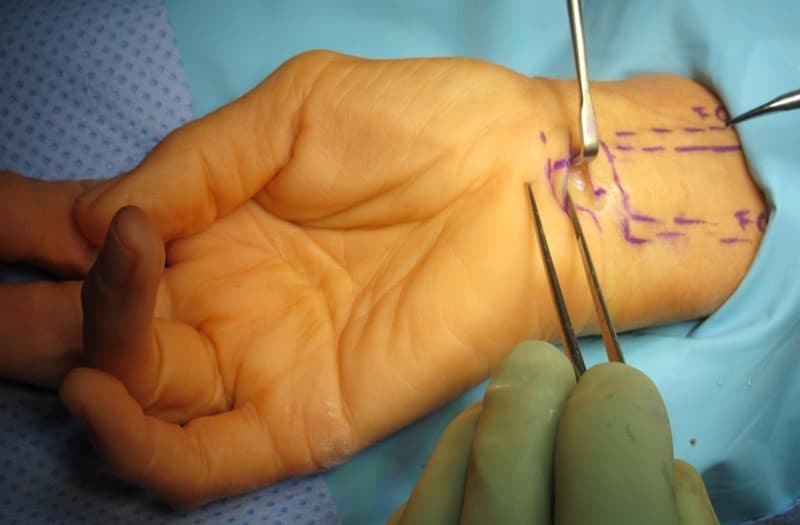
Carpal Tunnel Marking
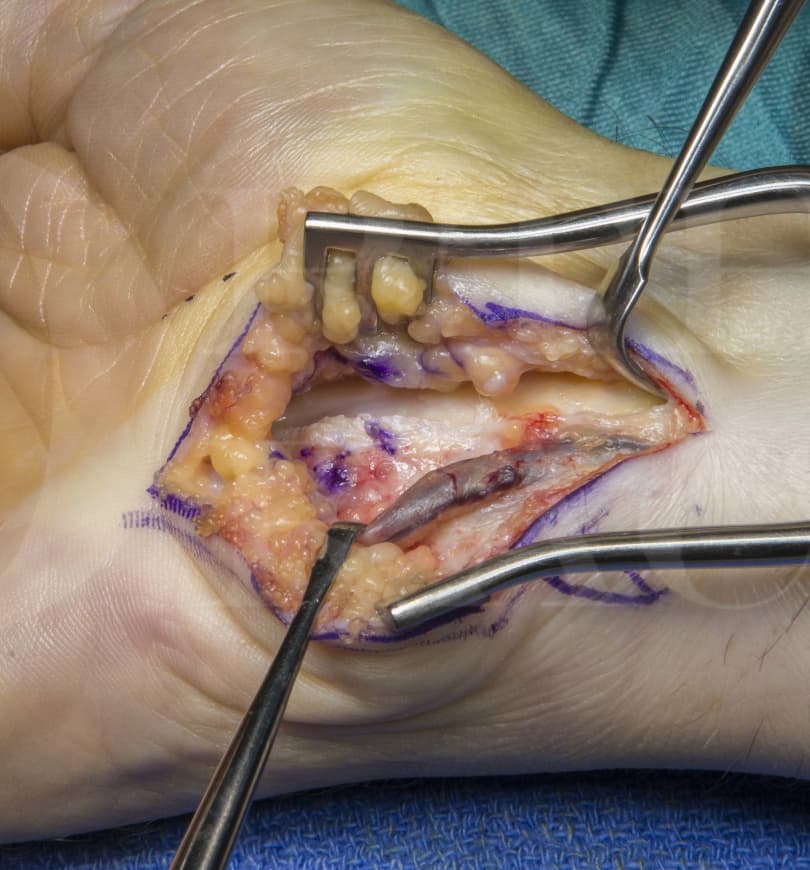
Carpal Tunnel Release Surgery
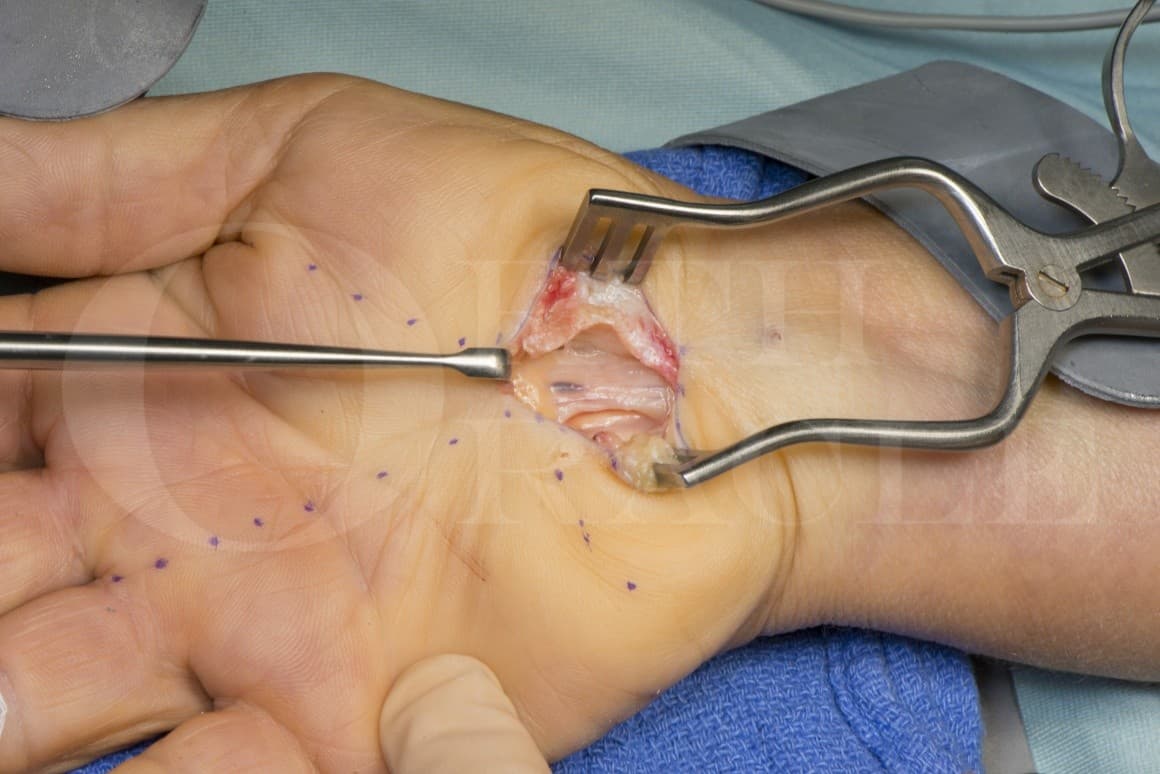
Carpal Tunnel Release
FAQ
Frequently Asked Questions
Is carpal tunnel release major surgery?
No — it's typically a short day-case procedure performed under local anaesthesia, with most patients going home the same day.
Will symptoms come back after surgery?
Recurrence is uncommon once the ligament is fully divided, though some underlying causes (such as pregnancy or certain medical conditions) can contribute to symptoms elsewhere.
Do I need surgery, or can splints and injections be enough?
Many mild cases improve with splinting or a steroid injection; surgery is generally considered when symptoms are more severe or non-surgical measures haven't given lasting relief.
What's the difference between open and endoscopic release?
Both divide the same ligament to relieve pressure on the nerve; endoscopic release uses a smaller incision and camera guidance, while open release uses a direct incision — your surgeon will advise which suits your situation.
How soon can I return to typing or using my phone?
Light, gentle hand use is often possible within days, though this is guided by your surgeon based on your healing and any symptoms during use.



Have Questions About Carpal Tunnel Release?
Every case is different. Get in touch to discuss your situation, or keep reading for more on candidacy, recovery, and what to expect.
All Procedures